The Master of Environmental Design program is a two-year, tuition-free, research-based program culminating in an independent project. Started in 1967, the M.E.D. program remains one of the first and most intensive of its kind with a history that is particularly relevant today.
The program has long addressed the aggregate of objects, networks, and socio-political influences that shape spatial environments. Today that environmental scope turns to many interdependent contemporary issues including climate change, global inequality, racial injustice, large socio-technical organizations, and planetary political solidarity. Returning to its activist roots, the program conceives of design as a practice that applies disciplinary skills to new responsibilities and a platform for interdisciplinary collaborations that reach beyond the academy to address urgent issues.
The M.E.D. program prepares students for a critical practice in spatial activism, public scholarship, advocacy, teaching, curatorial work, and experimental design. It may also provide a foundation for future Ph.D. studies in architecture and related fields. M.E.D. graduates build spatial fluency in culture, articulate the political and environmental instrumentality of space, and lend more authority to spatial practices in culture and governance.
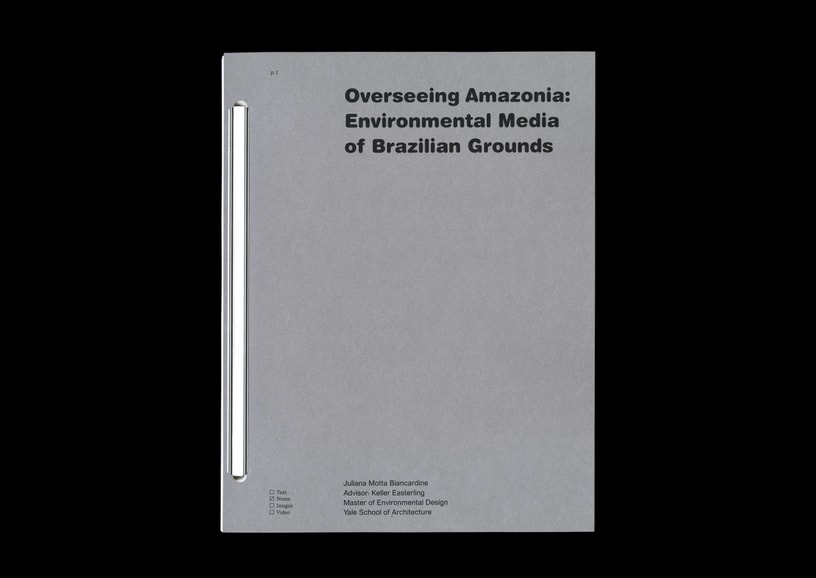
The program culminates in a final project document. While a rigorously researched text accompanies each project, students and advisors develop a methodology and tailor a unique document to address the specifics of the inquiry. This document may include experimental design proposals, mappings, web archives, opinion pieces, field guides, exhibitions, conference proceedings, or documentations of activist organizing.
Situated to cross reference all the programs at YSoA and many disciplines at Yale, M.E.D. students have a special agency. Roundtables held each semester are a crossroads for guests from all across the university as well as practitioners and activists working in the field. Researchers may teach, access archives, or take part in symposia and collaborative projects within the university. But students are also encouraged to do the work of building broader coalitions for future work outside the university.


Eligibility and Admissions
Areas of Study
Environmental Design addresses the aggregate of objects, networks, and socio-political influences that shape spatial environments. The program supports research at the intersection of research and practice. Those studying in the M.E.D. program are encouraged to position their work within both deep histories and contemporary cultural milieus. The M.E.D. program fosters an interdisciplinary approach to architectural research which takes advantage of the extensive array of resources at Yale University. Students are encouraged to engage in a wide array of methodologies, tools, and topics. The four areas below reflect recurring research interests:
Spatial Activism and Advocacy
Developing documents and modes of organizing to support activist partners in the field, crafting an advocate’s voice for opinion and long-form journalism pieces that foreground spatial practices, studying the impacts of cultural persuasions on political climates.
Design Ecologies
Studying contemporary and historical forces shaping climate change, inequality, racial injustice, land tenure, socio-technical infrastructures, and environmental justice; developing and advocating for innovative forms of design to reverse environmental/social abuse.
History, Theory, and Criticism of Architecture and Urbanism
Studying the history and theory of architecture, urbanism, and landscape and their intersections with broader cultural aesthetics and politics; developing a voice for architectural criticism and public scholarship.
Media Studies and Design
Contributing spatial evidence to studies of media and infrastructure; using digital tools for mapping, visualizing data, and fabricating building components; developing exhibitions and curatorial strategies.
Course of Study and Requirements
In course titles, a designates fall term, and b designates spring term. The school reserves the right to change the prescribed course of study as necessary.
The program of study is a combination of required classes, electives, and independent research. A total of 72 credits is required for completion of the M.E.D. program, allocated as 18 credits each term. A minimum of 27 credits is assigned to electives, of which one course must satisfy the research methods elective requirement and one course must satisfy the theory elective requirement. A maximum of 45 credits is assigned to independent research (ARCH 7007). The electives and course distribution are determined in consultation with the student’s primary adviser and the director of the program.
Course requirements for the M.E.D. Program
M.E.D. students are required to take a course in research methodologies and a course in architectural theory. With approval from the director, these requirements may be fulfilled by courses taught within the university. All other course work is distributed among electives chosen from School of Architecture and other Yale University courses. (See descriptions of courses in the M.Arch. curriculum as well as in the bulletins of other schools of Yale University and online at Yale Course Search, http://courses.yale.edu.) All M.E.D. students are required to take ARCH 7007 each term to develop their independent project. Requirements for this course include regular meetings with advisers, participation in three workshops per term, and presentation at a roundtable discussion each term. Graduating students defend their final project during the fourth term of study.
Note: Design studios offered in the M.Arch. program are closed to M.E.D. students. Exceptions are considered only if the design studio is directly related to a student’s research, and are subject to approval by the M.E.D. program director, the dean, and the studio instructor.
M.E.D.: Total Requirement: 72 credits First Year (Fall)
First Year (Spring)
Second Year (Fall)
Second Year (Spring)
Summer preparation courses for incoming M.E.D. students
In the week before the beginning of the fall term, the school offers two preparation courses that are required for incoming M.E.D. students.
Summer Digital Media Orientation Course. This half-day orientation covers accessing the school’s servers, use of the school’s equipment, and the school’s digital media policies and procedures.
Arts Library Research Methodology Course. This course covers research methodologies and tools specific to the M.E.D. curriculum.
Advisors and M.E.D. Program Committee
Students work closely with one or two advisers on their independent project. Advisers are primarily drawn from the School of Architecture faculty. Additional advisers are drawn from other Schools at Yale. The following faculty members serve on the M.E.D. committee, which reviews all independent work each term.
Keller Easterling, YSoA, Chair Eeva-Liisa Pelkonen, YSoA Alan Plattus, YSoA Elihu Rubin, YSoA
Faculty from the following schools and groups at Yale also serve as M.E.D. advisors and readers: Agrarian Studies, American Studies, School of Art, History of Art, Anthropology, Center for Collaborative Arts and Media (CCAM), East Asian Studies, Environmental Humanities, English, Film and Media Studies, History, History of Science and Medicine, Latin American Studies, Native American Cultural Center, Yale Group for the Study of Native America, Asian Studies, and Yale School of the Environment (YSE).