











Student Work


1∕4
Title
On a Grove
Project Description
Alfonse Chiu | Master of Environmental Design (M.E.D.) 2025
Advisor: David Sadighian
Reader: Michael Osman
“What profound silence! Not a single bird-note was heard in the sky over this grave in the hollow of the mountains. Only a lonely light lingered on the cedars and mountains. ” — In a Grove (1922)
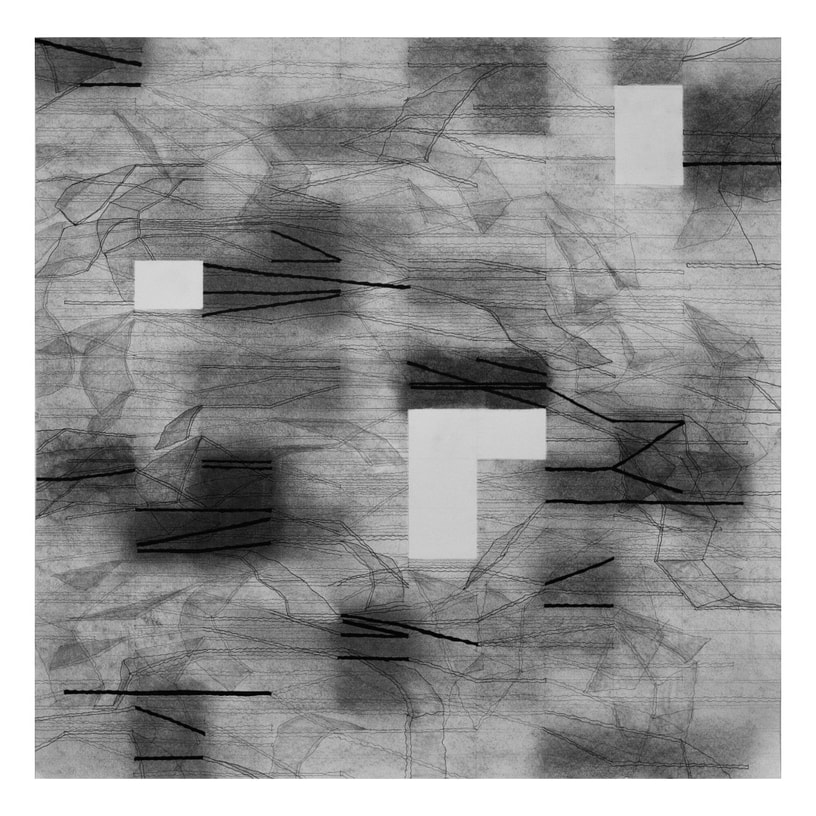
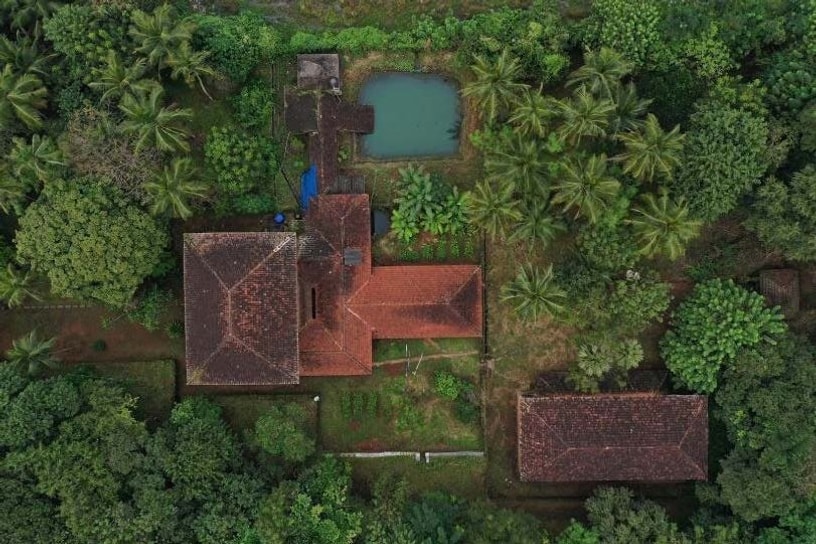
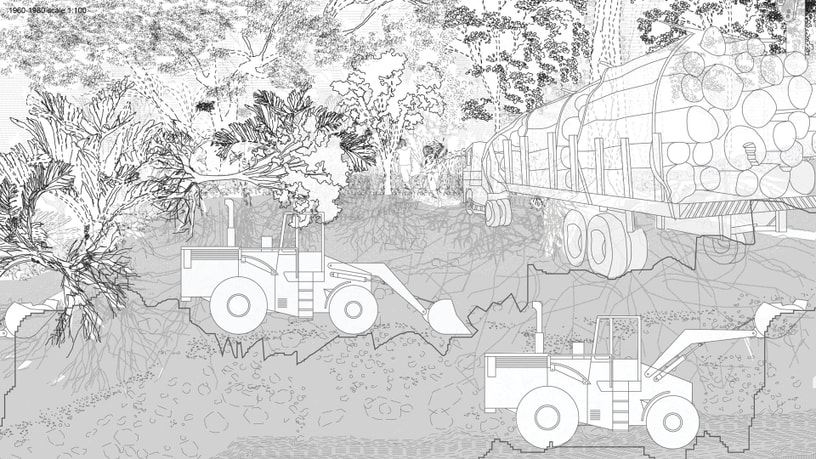
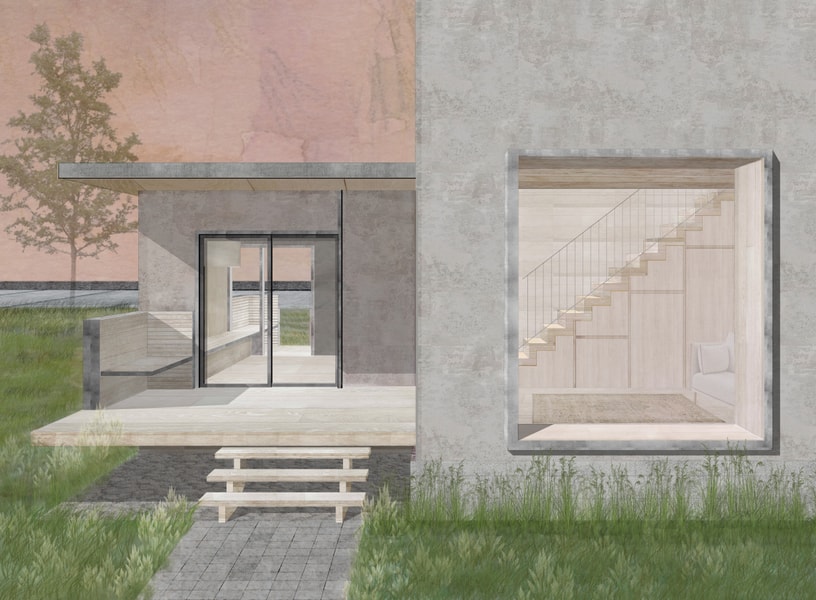
This essay is inspired by the 1922 short story In a Grove by Japanese writer Ryūnosuke Akutagawa, which was later adapted into the acclaimed movie Rashōmon by Japanese filmmaker Akira Kurosawa in 1950. Widely considered to be a key entry in modern Japanese literature, In a Grove takes the form of seven contradictory testimonials to a young samurai’s murder that each paint a different impression and understanding of the event with neither clear resolution nor the discernment of an absolute truth at the story’s close beyond exposing the biases of each involved party. Taking In a Grove to be a useful exercise in contemplating the variable relationships between certainty, truth, and representation when interpolated through different ideologies and motives, I composed On a Grove as a reflection of my own experiences encountering and researching the oil palm groves that make up the plantation landscapes of Malaysia.
Centered around an investigation of how extractive industries and corporate finance co-constituted each other in and through the colonial space of British Malaya and later independent Malaysia, my thesis project seeks to identify a spatial history of property, desire, and capital accumulation in colonial Southeast Asia. From one perspective, the plantation and its logics of operation and reproduction lie at the core of the imperial enterprises of extraction and expansion, which defined European presence in Asia and Africa across the long 19th century. However, the end of direct colonial rule across the mid-20th century did not spell the end of the plantation; instead, it became absorbed into the economic and territorial vocabularies of newly independent nation-states which maintained the plantation as an instrument of development, reproducing dynamics of exploitation and dispossession, only now with a different set of beneficiaries: elite cronies and local capitalists whose assets survived the regime shifts.
However, what is the plantation for everyone else? What doe a plantation do to and for the plantation workers whose common histories of migration are intertwined with tectonic shifts in the global labour market arising due to imperial meddling; the indigenous communities from lands that have now been consumed by the plantation; the everyday urbanite whose diet is built upon the agricultural products of the plantation, and everyone else? Haunting the societies and economies of the tropical belt, the plantation is a strange spectre that occupies multiple places in space and time. As much as it was a historical structure that shaped the developmental trajectories of post-colonial states, it is also a continually present and active instrument for pathdependent neoliberal states to plant and accumulate capital surpluses. In many ways, the 2 plantation is here and not here, that is to say, it is everywhere; a physical place, a state of mind, a set of definitions in policies and legislatures. An image in a tourism brochure.
My struggles to delimit the plantation are what lead to this document in this shape. Troubled by the impossibility of identifying all that a plantation is and can be in Malaysia, I turn to stories instead as a heuristic for engaging with the ambivalence and indeterminacy of the plantation—to reflect first on a grove and some of what it has been, what it will be.